Axles
What is a floater axle?
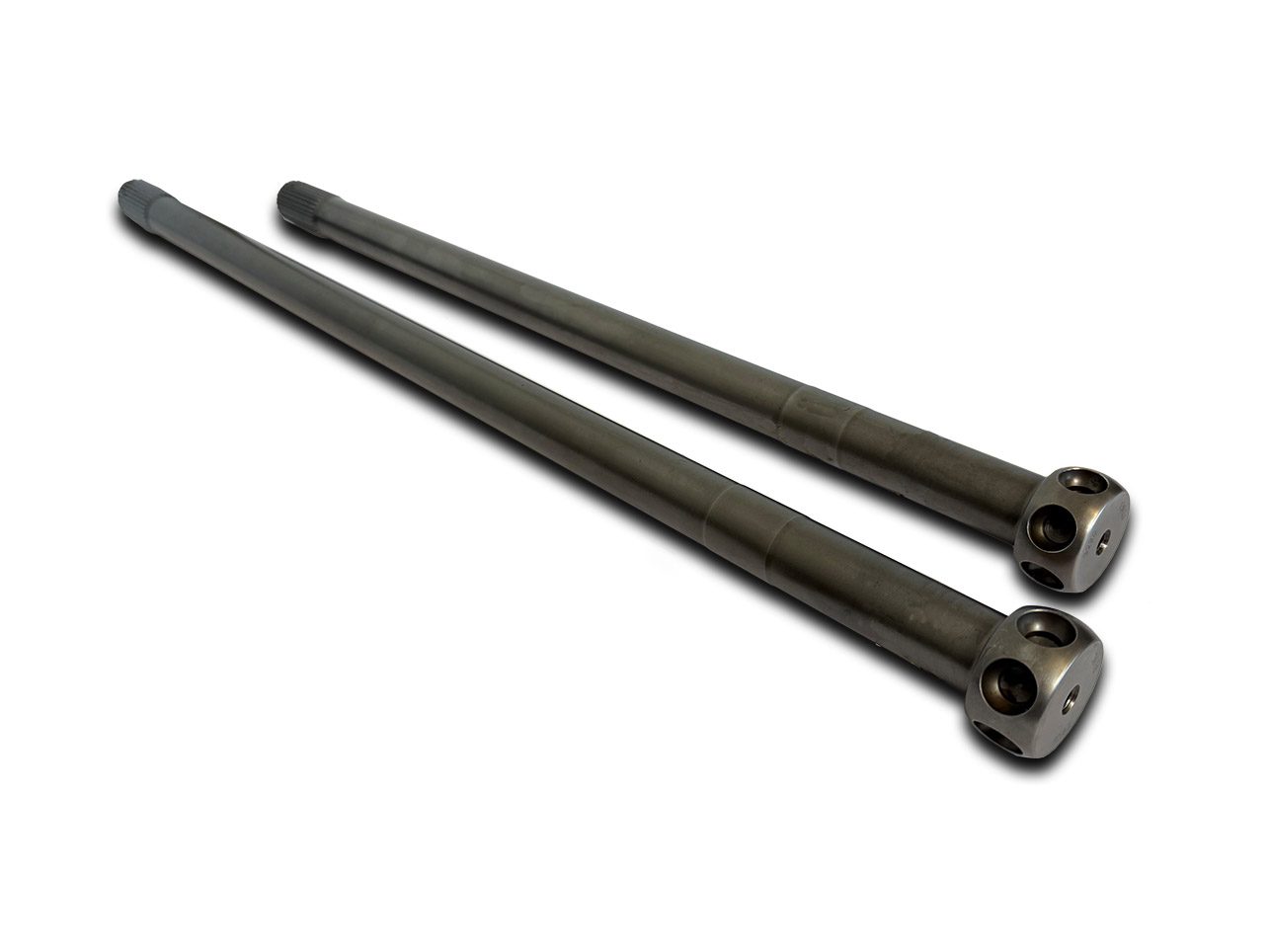
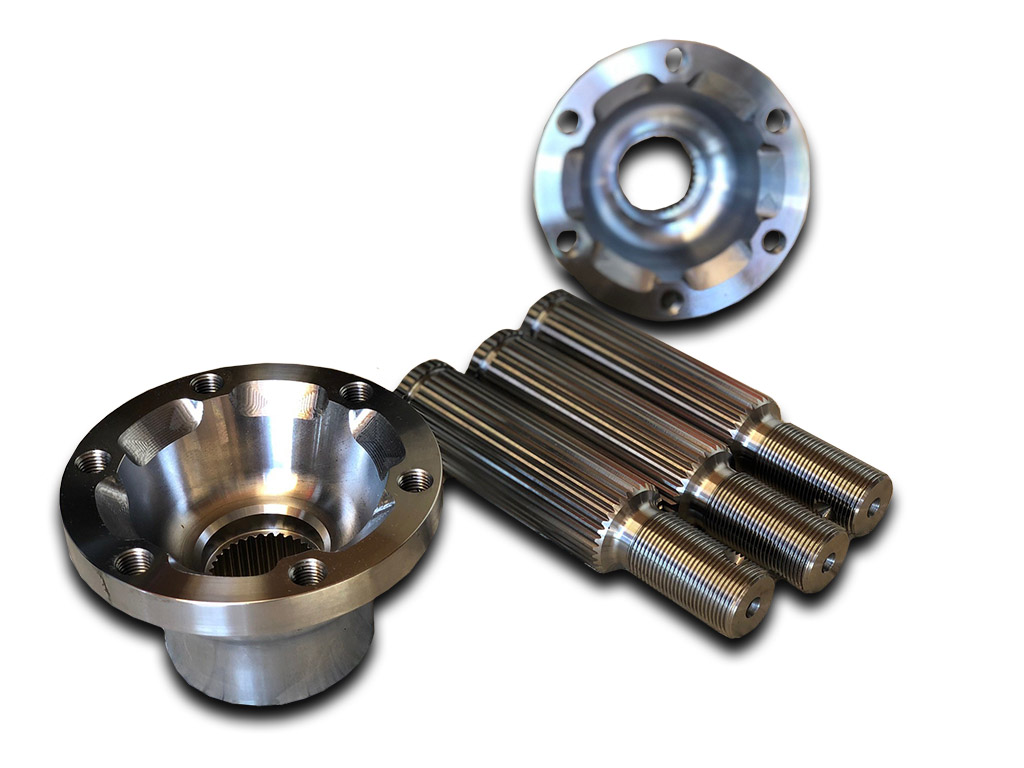
In a full floating rear end, the axle does one job: transmit torque from the diff to the wheel. The hub, bearings and housing carry the weight of the car, handle cornering and braking loads, and locate the wheel. The axle just drives. That’s what “floating” means: the axle floats inside the housing, splined at both ends, with no structural load on it other than twist.
What is the difference between floater and flanged axles?
In a flanged setup, the axle shaft carries everything: torque, vehicle weight, braking force and cornering load. In a floater, those loads go through the hub and bearings, and the axle only deals with transmitting drive. It’s a simpler job, which means it can be made stronger for the one thing it needs to do.
The biggest advantage is safety. If a flanged axle breaks, you lose the wheel. If a floater axle breaks, the wheel stays on the car because it’s retained by the hub and bearings, not the axle.
As a general guide, once you’re running 10″ or wider wheels on a street car, getting quicker than about 7.50 seconds in the quarter, or pushing past 1,000hp, a floater setup starts making a lot more sense than a flanged one. Beyond the safety factor, floaters also reduce brake pad knockoff under hard cornering because the hub and bearings are doing the locating work, not the axle.
If you’re running a flanged rear end and want to move to a floater setup, have a look at our floater kits.
How we approach it
Every axle we make is machined in-house from billet material, heat treated in Australia, and straightened to a runout tolerance tighter than the big name brands. Every axle has true involute hobbed splines for uniform load distribution and proper mating with spools, LSDs and OEM components.
Axles are necked down from the spline so wind-up is distributed over a longer area rather than concentrated at one point. Every axle is batch marked so we can trace it back to the mill that produced the raw material.
The results reflect that process. Our V8 Supercar axles maintained a zero failure rate. The same axles power some of the fastest drag cars in Australia and New Zealand.
In terms of what’s available, we hold a large range of straight floater axles ex-stock in 4340 chromoly and 300M for quick turnaround, and manufacture cambered CV ball drive axles in EN26 and 300M. Custom lengths, spline counts and materials are available for any application, including options like gun drilling for weight reduction.
Our floating axle range
Select the axles below that best suit your build.